
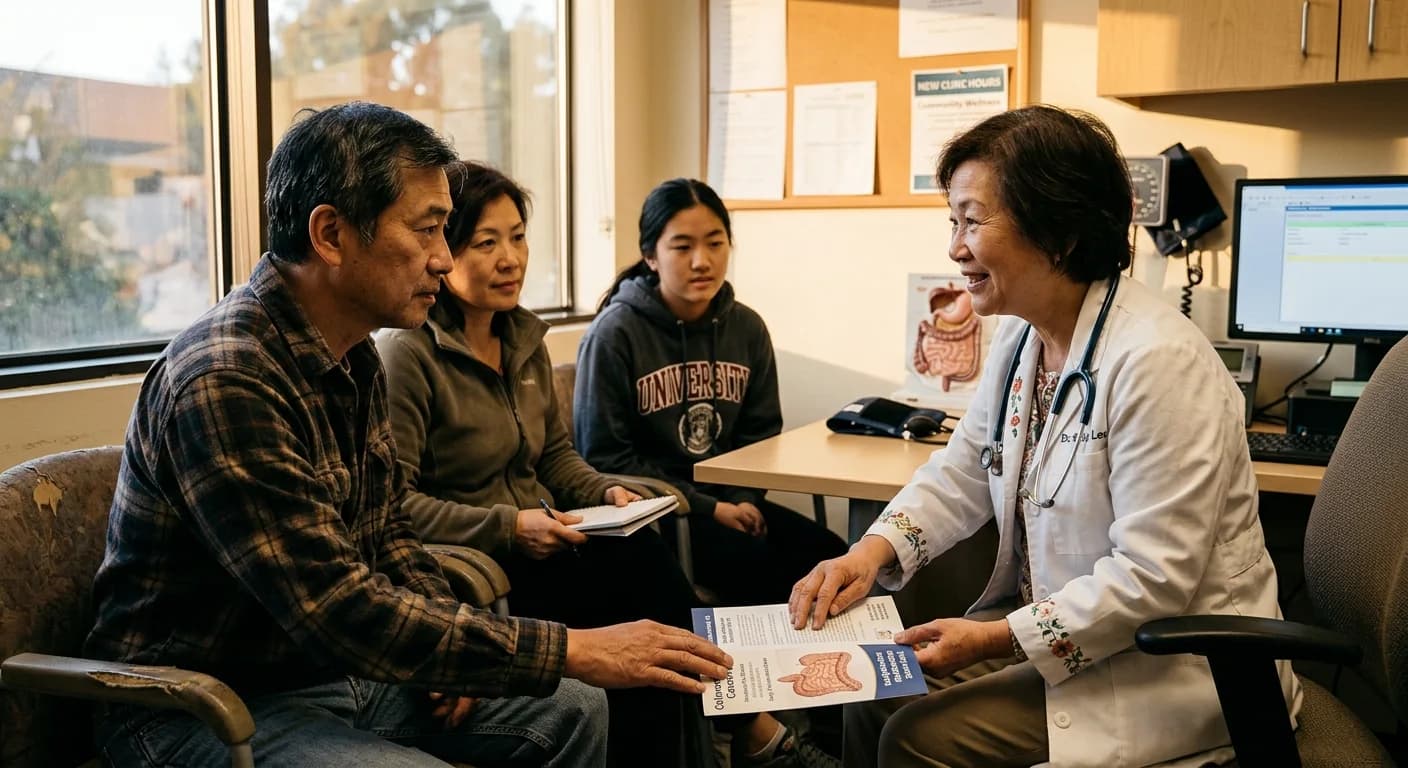
This March, we tackle colorectal cancer screening taboos in Asian communities, explain what to expect during a colonoscopy, and introduce five new verified clinics that offer language support in Vietnamese, Korean, and Chinese.
Key Takeaways
- This March, we tackle colorectal cancer screening taboos in Asian communities, explain what to expect during a colonoscopy, and introduce five new verified clinics that offer language support in Vietnamese, Korean, and Chinese.
- Dear Asian Health Hub community, As we welcome the first days of spring, March is also Colorectal Cancer Awareness Month — a time to talk openly about a topic that many of us in Vietnamese, Korean, and Chinese American families prefer to avoid.
- In our communities, discussing bowel health or scheduling a colonoscopy can feel uncomfortable, even taboo.
- But the truth is, colorectal cancer is one of the most preventable cancers when caught early.
Dear Asian Health Hub community,
As we welcome the first days of spring, March is also Colorectal Cancer Awareness Month — a time to talk openly about a topic that many of us in Vietnamese, Korean, and Chinese American families prefer to avoid. In our communities, discussing bowel health or scheduling a colonoscopy can feel uncomfortable, even taboo. But the truth is, colorectal cancer is one of the most preventable cancers when caught early. And with language-accessible care, you don’t have to face this alone.
In this issue of AHH Pulse, we’ll walk you through what a colonoscopy really involves, share tips to overcome cultural barriers, and introduce five new verified clinics that speak your language. Let’s take this step together — for your health and your family’s peace of mind.
5 Crucial Health Tips for Colorectal Cancer Screening
1. Start screening at age 45 — or earlier if you have a family history. Many Asian Americans assume they are too young for colorectal cancer, but rates are rising in people under 50. If you have a parent, sibling, or child who had colorectal cancer or polyps, talk to your doctor about starting screening even earlier. Early detection saves lives.
2. A colonoscopy is not as scary as you think — and it’s the gold standard. The preparation (the “cleanout”) is the hardest part, but the procedure itself is done under sedation, so you won’t feel pain. Most people sleep through it and wake up with no memory of the exam. The entire appointment usually takes less than two hours, and you can return to normal activities the next day.
3. Don’t let embarrassment or cultural stigma stop you from talking to your doctor. In many Asian cultures, discussing bowel movements or rectal exams is considered private or shameful. But your doctor has seen and heard it all — they are there to help, not judge. Bring a trusted family member or request a same-language provider to make the conversation easier.
4. If you can’t get a colonoscopy, ask about at-home stool tests. For those who are not ready for a colonoscopy, non-invasive options like the fecal immunochemical test (FIT) or Cologuard can be done at home. These tests detect blood or abnormal DNA in stool. However, if the result is positive, you will still need a colonoscopy. Talk to your provider about which option is right for you.
5. Prepare a bilingual health history and medication list before your appointment. Bring a written list of your medications, allergies, and any family history of cancer — in both English and your native language. This helps ensure nothing is lost in translation. Many clinics now offer interpretation services, but having your own notes can make the visit smoother and more accurate.
Spotlight: Newly Verified Clinics Added This Month
We are proud to welcome five new clinics to our directory this March. Each has been verified for quality care and language support, making it easier for you to find a provider who understands your needs.
| Clinic Name | Specialty | Location | Language Support |
|---|---|---|---|
| Children's Health Center (4D) | Pediatrics | None, None | English, Chinese |
| Providence Pediatrics - Redondo Beach | Pediatrics | Redondo Beach, CA | English, Korean |
| Fountain Valley Pediatrics | Pediatrics | None, None | English, Vietnamese |
| PM Pediatric Urgent Care | Pediatrics | Tustin, CA | English, Vietnamese |
| Pediatric & Adult Medicine | Pediatrics | Tustin, CA | English, Vietnamese |
Note: While these clinics specialize in pediatrics, many also see adult patients or can refer you to trusted colorectal specialists. Always call ahead to confirm.
Tips for Navigating Healthcare without Language Barriers
1. Check insurance and interpreter availability before booking. Before scheduling any screening, call the clinic and ask: “Do you accept my insurance?” and “Can you provide a medical interpreter in my language at no cost?” Under federal law, clinics receiving federal funds must offer free interpretation services. Don’t be shy — it’s your right.
2. Prepare a bilingual care notebook. Write down your symptoms, questions, and medical history in both English and your native language. Bring this notebook to every appointment. This simple step can reduce misunderstandings and help your doctor give you the best care.
3. Ask for a same-language provider if available. Many clinics now have multilingual staff. When making your appointment, specifically request a provider who speaks Vietnamese, Korean, or Chinese. Even if the doctor is not fluent, having a bilingual nurse or medical assistant in the room can make a world of difference.
Medical Disclaimer
The information in this newsletter is for educational purposes only. It is not a substitute for professional medical advice, diagnosis, or treatment. Always seek the advice of your physician or other qualified healthcare provider with any questions you may have regarding a medical condition or screening. Never disregard professional medical advice or delay in seeking it because of something you have read here.