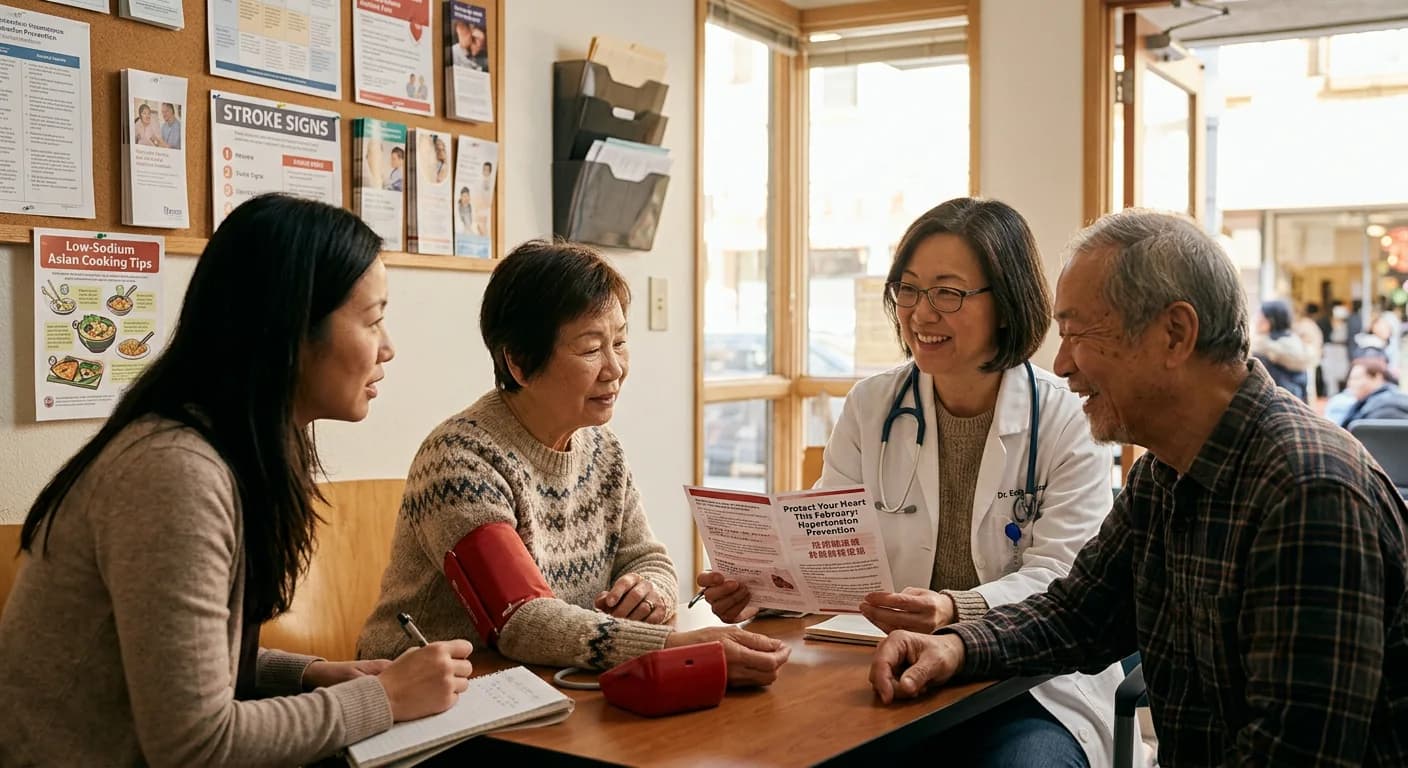
Protect Your Heart This February: Hypertension Prevention, Stroke Signs & Low-Sodium Asian Cooking Tips
Dear Asian Health Hub community,
February is American Heart Month — a time to focus on the heart that beats for our families. In many Asian American households, heart disease and stroke remain leading causes of death, yet they are often preventable. High blood pressure (hypertension) is a common silent threat, and traditional Asian diets can be rich in sodium from soy sauce, fish sauce, and salted condiments. The good news? Small, culturally‑informed changes can make a big difference. This month, we share practical tips for lowering your family’s risk, including how to spot stroke warning signs and cook delicious low‑sodium Asian meals. We also highlight five newly verified clinics that offer language‑accessible pediatric care — because every child deserves a provider who speaks your family’s language.
5 Crucial Health Tips for American Heart Month
1. Know Your Numbers — Especially Blood Pressure
High blood pressure often has no symptoms, but it silently damages arteries and the heart. Ask your provider to check your blood pressure at every visit, and consider a home monitor if you have a family history of hypertension. Normal blood pressure is below 120/80 mm Hg. For many Asian adults, risks can be higher even at lower body weights, so regular screening is essential.
2. Learn the BE FAST Stroke Warning Signs
Stroke is a medical emergency. Use the acronym BE FAST: Balance loss, Eyesight changes, Facial drooping, Arm weakness, Speech difficulty, Time to call 911. If you or a loved one suddenly cannot smile evenly, lift both arms, or speak clearly, act fast. Every minute counts. Share these signs with older family members — especially those who may be reluctant to call emergency services due to language concerns.
3. Reduce Sodium Without Losing Flavor
Traditional soy sauce, fish sauce, and miso are high in sodium. Try these swaps:
- Use low‑sodium soy sauce (or tamari) and dilute it with a splash of water.
- Boost flavor with ginger, garlic, chili, lemongrass, and herbs like cilantro or perilla.
- Rinse canned vegetables and use fresh or frozen produce instead. Aim for less than 2,300 mg of sodium per day — about 1 teaspoon of salt. Small changes in the kitchen can protect your whole family’s hearts.
4. Manage Stress for Heart Health
Multigenerational households and caregiving responsibilities can heighten stress, which raises blood pressure. Carve out 10 minutes daily for deep breathing or a short walk. Encourage elders to join gentle movement like tai chi or qigong. Talking openly about stress — even in a mix of English and your heritage language — helps reduce its toll on the heart.
5. Stay Active Together
Physical activity lowers blood pressure and strengthens the heart. Aim for at least 150 minutes of moderate exercise per week — for example, brisk walking, dancing, or family bike rides. In Asian cultures, group activities like morning walking clubs or multigenerational dance sessions can make exercise fun and sustainable. Check with your provider before starting a new routine.
Spotlight: Newly Verified Clinics Added This Month
We’ve been busy expanding our directory! This February, we added five pediatric clinics that are committed to language‑accessible care. All have been verified for accurate contact details and language support.
| Clinic Name | Specialty | Location | Language Support |
|---|---|---|---|
| Children's Health Center (4D) | Pediatrics | N/A | English, Chinese |
| Providence Pediatrics - Redondo Beach | Pediatrics | Redondo Beach, CA | English, Korean |
| Fountain Valley Pediatrics | Pediatrics | N/A | English, Vietnamese |
| PM Pediatric Urgent Care | Pediatrics | Tustin, CA | English, Vietnamese |
| Pediatric & Adult Medicine | Pediatrics | Tustin, CA | English, Vietnamese |
Note: Location “N/A” indicates data was not provided at the time of listing. Please contact the clinic directly for address details.
Tips for Navigating Healthcare without Language Barriers
-
Check Insurance and Language Support Before Booking When calling a clinic, ask: "Do you have staff who speak [your language]?" Also confirm your insurance plan is accepted. Many Asian‑focused clinics now offer telephone interpretation services — request this in advance.
-
Prepare a Bilingual Care Note Write down your symptoms, medications, and questions in both English and your heritage language. Bring it to every appointment. This helps reduce miscommunication and ensures your concerns are fully addressed.
-
Verify Interpreter Services at the Appointment Even if a clinic lists a language, confirm upon arrival that a professional medical interpreter is available — not a family member (who may feel uncomfortable or miss medical terms). You have the right to a qualified interpreter at no cost.
Medical Disclaimer
The information in this newsletter is for educational purposes only and does not replace professional medical advice, diagnosis, or treatment. Always consult a qualified healthcare provider with any questions regarding your health or a medical condition. If you think you are having a medical emergency, call 911 immediately.
Stay heart‑healthy this February — and every month.
Warmly,
The Asian Health Hub Team
✉️ AHH Pulse Newsletter
Health tips & clinic spotlights for Asian Americans.