
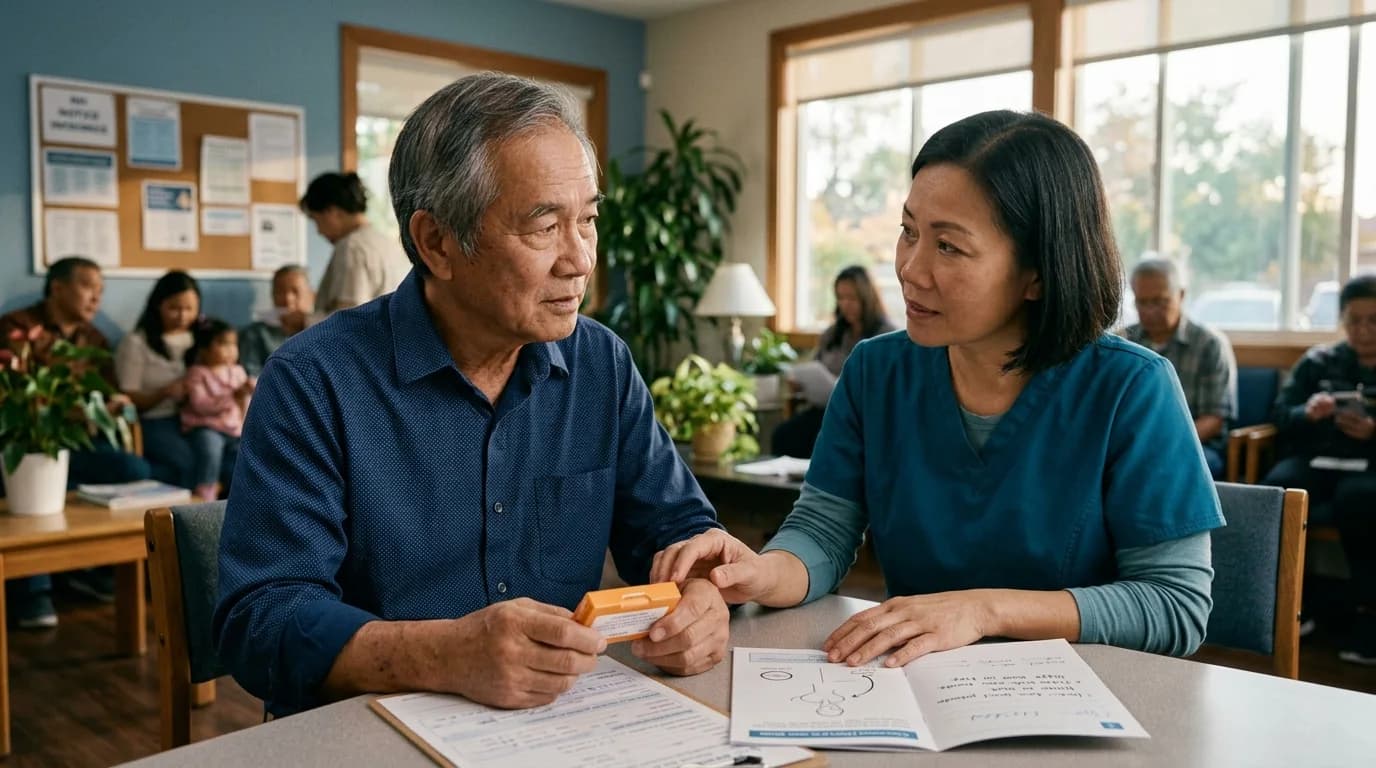
Learn why Asian Americans may need colorectal cancer screening before age 45, plus culturally adapted prevention tips for Vietnamese and Korean families navigating U.S. healthcare.
Key Takeaways
- Asian Americans may need colorectal cancer screening before age 45 due to higher rates of early-onset disease; discuss your family history and ethnic background with your doctor to determine your personal starting age.
- Cultural barriers like language confusion, fear of costs, and limited discussion of bowel health in Vietnamese and Korean communities often delay screening until symptoms appear.
- Both colonoscopy and stool-based tests (FIT, Cologuard) are effective options; your choice depends on risk, comfort, and access—ask your provider to explain in plain language.
- Family-centered prevention—such as reducing processed meats in traditional meals and encouraging relatives to screen together—can overcome hesitation and save lives.
- Talk openly with your provider about screening; bring a family member or request an interpreter if needed. Waiting for symptoms reduces treatment success.
Why Asian Americans May Need Earlier Screening: Understanding the Risk
Studies have found that Asian Americans, particularly those of Vietnamese, Korean, and Chinese descent, have a higher incidence of early-onset colorectal cancer—diagnosed before age 50. This elevated risk is linked to a combination of genetic factors, higher rates of chronic inflammation from conditions like diabetes and fatty liver disease, and the prevalence of Helicobacter pylori infection, a bacterium common in parts of Asia that is associated with increased colorectal cancer risk. For a Vietnamese American parent who feels healthy, or a Korean American elder with a history of stomach issues, these underlying risks can go unnoticed until symptoms appear. The practical takeaway is clear: do not wait for warning signs like blood in the stool or unexplained weight loss. Talk to your doctor about your family history and whether a baseline colonoscopy at age 40 is appropriate for you. Age 45 is a starting point, not a safety guarantee for everyone.
Real Barriers: How Cultural Norms Delay Screening in Vietnamese and Korean Families
In Vietnamese American households, cancer is often spoken of in hushed tones—or not at all. A common belief is that discussing illness invites bad luck, so many avoid the topic even when symptoms appear. For a father running a small nail salon or a mother caring for aging parents, personal health takes a backseat to family obligations, and a colonoscopy feels like an impossible luxury.
Korean American families face a different but equally powerful set of barriers. In community networks built around churches and gye (rotating savings clubs), health advice flows through trusted elders rather than doctors. If a respected aunt says colonoscopies are painful or unnecessary, that opinion carries more weight than a physician’s recommendation. Shame about the body also plays a role; many Korean Americans over 50 report feeling embarrassed to discuss bowel-related procedures. This cultural silence, combined with language barriers at clinics and a preference for "waiting it out," means a screening conversation may never start at all until pain forces the issue.

Screening Options Compared: Colonoscopy vs Stool Tests – What You Should Discuss
Colorectal cancer screening includes more than just colonoscopy. Understanding each option can help you choose what works for your life and risk level.
| Screening Option | How It Works | Frequency | Prep Required | Key Consideration |
|---|---|---|---|---|
| Colonoscopy | Visual exam of entire colon with sedation | Every 10 years | Yes (bowel prep) | Gold standard: detects and removes polyps in one session |
| FIT (Fecal Immunochemical Test) | Detects hidden blood in stool | Yearly | No | Noninvasive but positive result requires colonoscopy |
| Cologuard (mt-sDNA) | Detects blood and DNA markers in stool | Every 3 years | No | Higher false-positive rate; confirm with colonoscopy |
| Flexible Sigmoidoscopy | Examines lower colon only | Every 5 years | Partial | Misses upper colon polyps |
For Asian Americans with family history or other risk factors, colonoscopy remains the best choice because it can both find and remove precancerous growths. Stool tests are a practical alternative if you fear sedation, lack paid time off, or have language barriers around prep instructions. Many Vietnamese and Korean patients discover only after asking that stool tests exist—and that they do not require missing work. Discuss your family history and comfort level with your provider to select the test that fits.
A Practical Checklist: Talking to Your Family and Doctor About Colorectal Cancer Screening
For many Asian American families, discussing bowel health can feel uncomfortable—yet these conversations are vital. This checklist helps you start the dialogue with confidence, respecting cultural norms while advocating for your health.
-
Frame it as family care. Tell your relatives: “I want to stay healthy so we can be together for years to come.” This approach resonates with the collective values common in Vietnamese and Korean households.
-
Bring a language ally. If medical terms feel overwhelming, request a clinic interpreter or ask a bilingual family member to join the appointment.
-
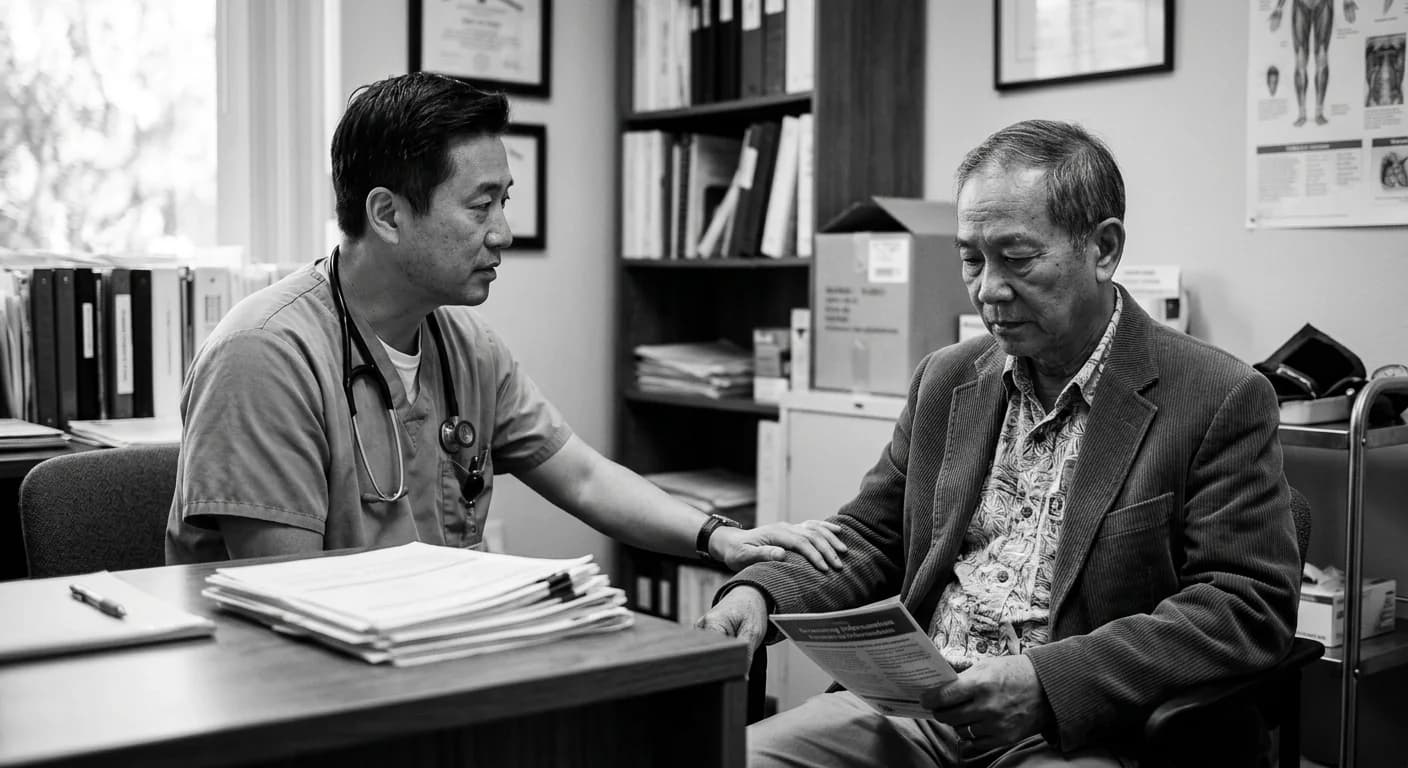
Ask your doctor directly. Say: “I’m Asian American. Should I start screening before age 45 based on my ethnicity and family history?” This prompts providers to consider earlier screening.
-
Use softer language if needed. Instead of “colon cancer screening,” say “a routine stomach check-up” or “a preventive health appointment” to reduce resistance.
-
Share a community story. Mention that a friend’s stool test caught something early—word-of-mouth trust is powerful in building motivation among relatives.
-
Prepare answers for common worries. Reassure your family that most screenings are free under the Affordable Care Act, and stool tests require no prep or sedation.
Prevention Tips That Fit Your Family’s Kitchen and Lifestyle
Prevention stays sustainable when it aligns with your family’s daily routines. Start with simple swaps in Vietnamese cooking: replace processed cha lua with fresh fish and add water spinach or other leafy greens to meals. In Korean kitchens, cut back on heavy grilled meats and increase namul (seasoned vegetable side dishes) and tofu-based stews. Fiber-rich vegetables help lower colorectal cancer risk.
Move together as a family. A 15-minute walk after dinner or a weekend hike with relatives makes physical activity a shared habit rather than a chore.
Knowledge is prevention. Gently ask parents or older siblings about any history of colon polyps or cancer. Many will share if the conversation feels caring rather than clinical. If a close relative had colorectal cancer, you may need screening before age 45.
Finally, schedule a screening talk this month. Call your doctor to discuss a stool test or colonoscopy—don’t wait for symptoms. Early detection is the single most effective step your family can take.
FAQs
At what age should Asian Americans start colorectal cancer screening?
National guidelines recommend starting at age 45 for average-risk individuals. However, because some Asian American subgroups face higher rates of early-onset colorectal cancer, you should discuss your family history and ethnic background with your doctor to see if starting earlier—possibly at age 40—is right for you.
Does insurance cover screening colonoscopy for Asian Americans?
Yes. Under the Affordable Care Act, most private insurance plans and Medicare cover colorectal cancer screening at no out-of-pocket cost when you are age-eligible. This includes colonoscopy, FIT, and other stool-based tests. If you are uninsured, community health centers and some hospitals offer sliding-scale fees or free screening programs.
What if I don't have symptoms? Do I still need screening?
Absolutely. Colorectal cancer often develops without any symptoms in its early stages. Waiting until you notice blood in your stool, abdominal pain, or unexplained weight loss may mean the cancer has already advanced. Screening finds precancerous polyps before they turn into cancer.
Is a stool test enough, or do I need a colonoscopy?
Both are effective, but they serve different purposes. A stool test (FIT or Cologuard) is a noninvasive home test. If it returns positive, you will need a follow-up colonoscopy. A colonoscopy is the only test that can both detect and remove polyps in one procedure. Discuss which option fits your risk level and comfort.
How do I prepare for a colonoscopy if I have dietary restrictions?
Preparation involves a clear liquid diet for 24 hours before the procedure. For Vietnamese and Korean families, this means avoiding rice, noodles, soups with solid ingredients, and herbal teas. Stick to clear broth, plain gelatin, apple juice, and black coffee or tea. Your doctor's office can provide a translated prep instruction sheet if you request one.
References
- CDC. "Screening for Colorectal Cancer | Colorectal Cancer | CDC." CDC
- CDC. "Colorectal Cancer Statistics | Colorectal Cancer | CDC." CDC
- National Cancer Institute. "Screening Tests to Detect Colorectal Cancer and Polyps - NCI." National Cancer Institute
- U.S. Preventive Services Task Force. "Recommendation: Colorectal Cancer: Screening | United States Preventive Services Taskforce." U.S. Preventive Services Task Force
- MedlinePlus. "Colorectal Cancer | Colon Cancer | Rectal Cancer | MedlinePlus." MedlinePlus
- NIH. "Disparities in Colorectal Cancer Screening Rates among Asian Americans and Non-Latino Whites - PMC." NIH
- NIH. "Colorectal Cancer Screening Among Foreign-born South Asians in the Metropolitan New York/New Jersey Region - PMC." NIH