

Learn why Asian Americans may need colorectal cancer screening before age 45, plus culturally adapted prevention tips for Vietnamese and Korean families navigating U.S. healthcare.
Key Takeaways
- Asian Americans may need colorectal cancer screening before age 45 due to higher rates of early-onset disease; discuss your family history and risk with a doctor.
- Cultural barriers such as language confusion, fear of cost, and distrust of the healthcare system often delay screening in Vietnamese and Korean American communities.
- Colonoscopy and stool-based tests are both effective; your choice may depend on access, cost, and comfort—ask about options in your language.
- Family-centered prevention—like cooking with less processed meat and encouraging relatives to screen together—can help overcome hesitation and save lives.
- Talk openly with your provider about screening; bring a family member or use an interpreter if needed—delaying screening until symptoms appear reduces treatment success.
Understanding the Risk: Why Asian Americans May Need Earlier Colorectal Cancer Screening
For most Americans, the U.S. Preventive Services Task Force recommends beginning colorectal cancer screening at age 45. However, emerging evidence suggests that Asian Americans may benefit from earlier conversations with their doctors. Research from the American Cancer Society and studies published in journals like Gastroenterology have observed that Asian American populations—particularly those of Vietnamese, Korean, and Chinese descent—face a higher incidence of early-onset colorectal cancer, meaning cancer diagnosed before age 50. While exact numbers vary, the pattern is clear: biology and ancestry matter, and one-size-fits-all screening timelines may miss cases in Asian communities.
Why the elevated risk? Several factors appear to play a role, including genetics, diet, and inflammation patterns linked to higher rates of chronic conditions like diabetes and fatty liver disease in some Asian subgroups. Additionally, the prevalence of Helicobacter pylori infection—a stomach bacterium more common in parts of Asia—has been associated with increased colorectal cancer risk. For a Vietnamese American family, this might mean that a parent who avoids the doctor because they feel fine could be carrying an underlying risk that won't show symptoms until the cancer is advanced. For a Korean American elder, a history of stomach issues might mask early colorectal warning signs, leading to missed opportunities for screening.
What this means practically: You should not wait until you have symptoms like blood in the stool, unexplained weight loss, or persistent abdominal pain. By that point, the cancer may already be growing. Instead, talk with your primary care provider about your family history—especially if a parent or sibling has had colorectal polyps or cancer—and whether starting screening at age 40 or even earlier is appropriate for you. Some gastroenterologists now recommend a baseline colonoscopy at age 40 for Asian Americans with a family history of colorectal cancer or known H. pylori infection. The key message is that age 45 is a minimum starting point, not a guarantee of safety for everyone.

Cultural Barriers That Delay Screening in Vietnamese and Korean American Communities
A Vietnamese American father in his early fifties, a small business owner with no paid sick leave, feels a dull ache in his lower abdomen. He tells himself it is nothing—his wife and children need him, and the insurance paperwork is in English he cannot fully navigate. He waits until the pain becomes sharp enough that a neighbor drives him to an urgent care clinic. By then, what might have been a routine colonoscopy is now a diagnostic workup for advanced disease. In Korean American communities, a similar pattern emerges. A mother in her late forties trusts her primary care doctor completely, but when that doctor does not raise screening, she assumes she does not need it. She relies on the recommendations of friends in her church network, where discussions about preventative procedures like colonoscopies are rare because they feel invasive or shameful. Fear of aggressive procedures, combined with respect for authority figures who stay silent, often delays care until symptoms force the conversation. For both communities, language access, cost anxiety, and a cultural tendency to prioritize family over personal health create compounded delays that screening programs must actively address.
Comparing Screening Options: Colonoscopy, Stool Tests, and What to Discuss With Your Doctor
Many patients assume screening means colonoscopy only, but several options exist. The right choice depends on your risk level, comfort, and access. For Asian Americans with a family history or other risk factors, colonoscopy remains the gold standard because it both detects and removes precancerous polyps in one session. Stool-based tests, such as the fecal immunochemical test (FIT) or Cologuard, are noninvasive and require no preparation, making them more convenient for those who fear the procedure or cannot take time off work. However, stool tests need to be repeated annually or every three years, and any positive result still requires a follow-up colonoscopy. When discussing options with your doctor, bring up your family medical history, any previous digestive issues, and your language needs. A Korean American patient once shared that her mother postponed screening for years because she thought all tests required sedation; she did not know that stool tests were available. Asking your provider to explain sedation options and test frequency in plain language can remove similar misunderstandings.
| Screening Option | How It Works | Frequency | Prep Required | Key Consideration |
|---|---|---|---|---|
| Colonoscopy | Visual exam of entire colon with sedative | Every 10 years | Yes (bowel prep) | Complete exam, removes polyps |
| FIT (Fecal Immunochemical Test) | Detects hidden blood in stool | Yearly | No | Inconvenient if positive, needs colonoscopy |
| Cologuard (mt-sDNA) | Detects blood and DNA markers in stool | Every 3 years | No | Higher false-positive rate; confirm with colonoscopy |
| Flexible Sigmoidoscopy | Examines lower colon only | Every 5 years | Partial | Misses upper colon polyps |
Discuss with your clinician which test aligns with your schedule, comfort level, and medical history.
How to Talk About Screening With Your Family and Provider: A Checklist
Talking about colorectal cancer screening can feel awkward—especially when cultural norms discourage discussing bowel habits or when family elders expect deference. Yet these conversations are essential, particularly for Asian Americans who may benefit from earlier screening. Use this checklist to start the conversation with confidence.
- Lead with family care. Frame screening as an act of love: “I want to be healthy for our children and grandchildren.” This resonates in Vietnamese and Korean families where collective well-being is prioritized.
- Bring an interpreter or bilingual relative. If insurance language is confusing or you’re unsure of medical terms, request a clinic interpreter or ask a trusted family member to help translate.
- Ask your provider directly. Say: “I’m Asian American. Based on my background, should I start screening before age 45?” This gives the doctor a clear prompt to address elevated risk.
- Use indirect language if direct talk feels too blunt. Try: “My doctor wants me to get a routine stomach check-up,” or “I’m following up on a preventive health recommendation.”
- Share a community story. Mention a friend or relative who had a stool test that found something early. Word-of-mouth trust is powerful in Vietnamese and Korean networks.
- Prepare for follow-up questions. Your family may worry about cost or pain. Have basic facts ready: most screening is covered by insurance under the Affordable Care Act, and stool tests are noninvasive.

Culturally Adapted Prevention Tips for Asian American Families
Prevention works best when it fits your family’s daily life. Try these culturally adapted steps:
-
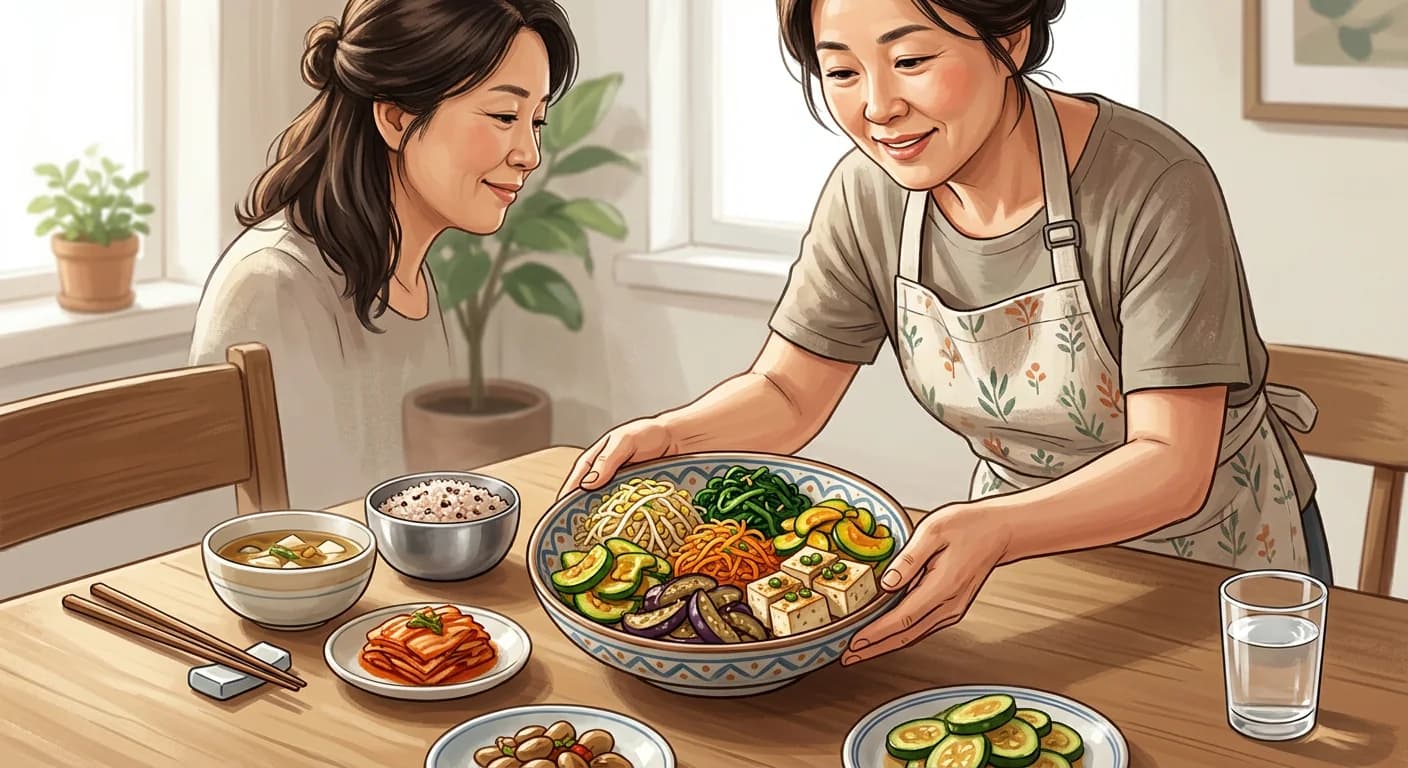
Adjust your diet. In Vietnamese meals, swap processed meats like cha lua for fish and add vegetables such as water spinach. For Korean meals, replace heavy yangnyeom grilled meats with namul and tofu. High-fiber foods help lower cancer risk.
-
Ask your family about health history. A parent or sibling with colon cancer means you may need screening before age 45. Bring up the topic gently—many older relatives are willing to share if asked directly.
-
Move together. Walking after meals or weekend hikes with extended family make physical activity a shared, enjoyable habit.
-
Schedule a screening talk. Don’t wait for pain. Call your doctor this month to discuss stool tests or colonoscopy. Early detection saves lives.
FAQs
At what age should Asian Americans start colorectal cancer screening?
Current U.S. guidelines recommend starting at age 45 for average-risk individuals. However, emerging research suggests that some Asian American subgroups may benefit from earlier screening due to higher rates of early-onset colorectal cancer. Discuss your family history and ethnic background with your primary care provider to determine the right starting age for you.
Does insurance cover screening colonoscopy for Asian Americans?
Under the Affordable Care Act, most private insurance plans and Medicare cover colorectal cancer screening at no out-of-pocket cost when you are age-eligible. This includes colonoscopy, FIT, and other stool-based tests. If you are uninsured or underinsured, community health centers and some hospital systems offer sliding-scale fees or free screening programs.
What if I don't have symptoms? Do I still need screening?
Yes. Colorectal cancer often develops without any symptoms in its early stages. Waiting until you notice blood in your stool, abdominal pain, or unexplained weight loss may mean the cancer has already advanced. Screening finds precancerous polyps before they turn into cancer.
Is a stool test enough, or do I need a colonoscopy?
Both options are effective, but they serve different purposes. A stool test (FIT or Cologuard) is a noninvasive screening tool done at home. If it returns positive, you will need a follow-up colonoscopy. A colonoscopy is the only test that can both detect and remove polyps in one procedure. Discuss which option fits your risk level, comfort, and access to care.
How do I prepare for a colonoscopy if I have dietary restrictions?
The preparation involves a clear liquid diet for 24 hours before the procedure. For Vietnamese and Korean families, this means avoiding rice, noodles, soups with solid ingredients, and herbal teas. Stick to clear broth, plain gelatin, apple juice, and black coffee or tea. Your doctor's office can provide a translated prep instruction sheet if you request one.