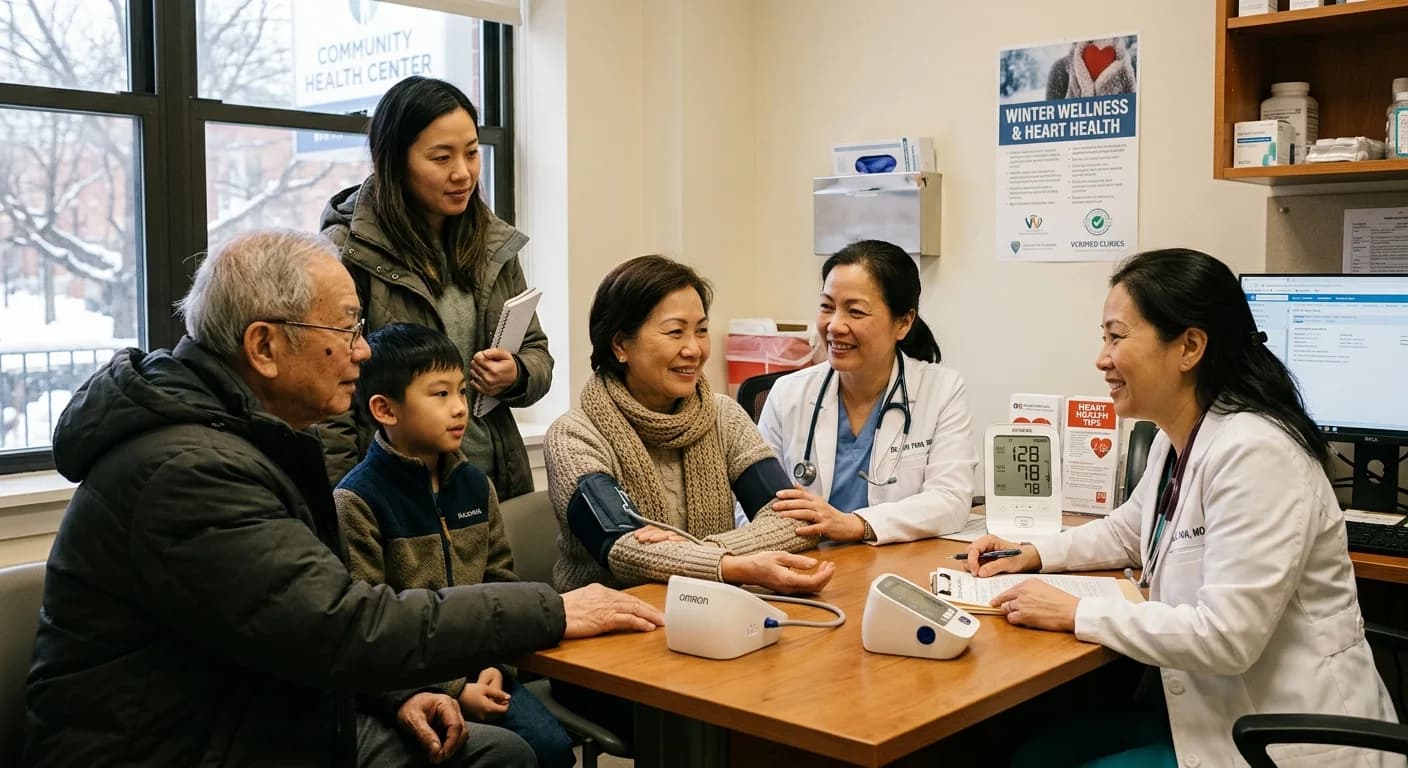
Winter Wellness for Multigenerational Families: Blood Pressure & Heart Health Tips + New Verified Clinics
Dear Asian Health Hub community,
As December settles in and temperatures drop, we know that winter brings unique health challenges—especially for families living in multigenerational homes. Whether you are caring for aging parents, young children, or both, staying on top of cardiovascular health and blood pressure is essential. That is why this issue of AHH Pulse is dedicated to cold-weather wellness and practical steps you can take to protect your heart and your loved ones.
We also celebrate the addition of five new verified pediatric clinics in our directory, all offering language support in Chinese, Korean, or Vietnamese. Because when you can communicate with your doctor in your native language, care becomes clearer, safer, and more effective.
5 Crucial Health Tips for Winter Wellness in Multigenerational Homes
1. Check Blood Pressure Regularly—Especially in Cold Weather
Cold temperatures can cause blood vessels to constrict, which may raise blood pressure. For older adults or those with existing heart conditions, this increase can be dangerous. Make it a family habit to check blood pressure at home at least twice a week, using a validated monitor. Keep a log to share with your doctor during visits. If you notice consistently high readings (above 130/80 mmHg), schedule an appointment promptly.
2. Stay Active Indoors Together
Winter often means less outdoor activity, but movement is vital for cardiovascular health. Encourage whole-family indoor exercises: try gentle stretching, chair yoga for grandparents, or dance breaks with children. Even 15–20 minutes of daily movement helps maintain circulation, lower blood pressure, and reduce stress. If you have stairs at home, walking up and down several times counts too!
3. Manage Stress and Prioritize Sleep
Multigenerational living can be a source of joy—and also stress. Caregiving responsibilities, financial worries, or even language differences can add to anxiety, which directly affects heart health. Set aside quiet time each evening for relaxation: deep breathing, meditation, or a warm cup of caffeine-free tea. Ensure every family member gets 7–9 hours of sleep per night; poor sleep is linked to higher blood pressure and heart disease risk.
4. Watch Salt in Traditional Dishes and Festive Meals
Winter often brings hearty soups, stews, and holiday feasts. While comforting, many traditional Asian recipes rely on soy sauce, fish sauce, or salted condiments. Too much sodium can spike blood pressure. Try using low-sodium versions, fresh herbs, garlic, or ginger as flavor alternatives. Also be mindful of processed snacks and canned goods. A simple swap—like using brown rice instead of white—can also help manage weight and blood sugar.
5. Keep Warm, but Avoid Overheating and Dehydration
Keeping warm is essential, but layering too heavily or sitting too close to heaters can cause dehydration and rapid temperature changes. Encourage everyone to dress in light, breathable layers and drink warm fluids like herbal teas or broths throughout the day. For elderly family members, check that their room is kept at a comfortable 68–72°F and that they are drinking enough water—thirst sensation often declines with age.
Spotlight: Newly Verified Clinics Added This Month
We are proud to expand our directory with five pediatric clinics that prioritize language accessibility. Whether you need a primary care provider, urgent care, or a specialist who speaks your language, these verified clinics are here to serve your family.
| Clinic Name | Specialty | Location | Language Support |
|---|---|---|---|
| Children's Health Center (4D) | Pediatrics | N/A | English, Chinese |
| Providence Pediatrics - Redondo Beach | Pediatrics | Redondo Beach, CA | English, Korean |
| Fountain Valley Pediatrics | Pediatrics | N/A | English, Vietnamese |
| PM Pediatric Urgent Care | Pediatrics | Tustin, CA | English, Vietnamese |
| Pediatric & Adult Medicine | Pediatrics | Tustin, CA | English, Vietnamese |
Note: For clinics with location listed as "N/A", please check our full directory on the Asian Health Hub website for updated address details or telehealth options.
Tips for Navigating Healthcare without Language Barriers
1. Verify Interpreter Services Before Booking
When scheduling an appointment, ask the clinic if they offer professional medical interpreters in your language (in-person, phone, or video). Do not rely on family members for complex medical conversations—especially if sensitive topics or treatment decisions are involved. Many clinics provide free interpretation upon request.
2. Prepare Bilingual Care Notes
Write down your symptoms, concerns, and questions in both English and your native language (Chinese, Korean, or Vietnamese). This helps you stay clear and ensures nothing gets lost in translation. Bring a printed copy to the appointment and ask the doctor to write key instructions in simple English (or request a translated summary if available).
3. Check Insurance Coverage for Translation Services
Under the Affordable Care Act, many health plans cover language assistance services at no extra cost. Call your insurance member services line ahead of time to confirm what is available. If you have Medicare or Medicaid, you almost always have the right to an interpreter free of charge. Don’t hesitate to ask—it is your legal right.
Medical Disclaimer
The information in this newsletter is for educational purposes only and does not substitute for professional medical advice, diagnosis, or treatment. Always seek the advice of your qualified healthcare provider with any questions you may have regarding a medical condition or treatment. Never disregard professional medical advice or delay in seeking it because of something you have read in this publication.
Thank you for being part of the Asian Health Hub community. Stay warm, stay healthy, and see you in the new year!
✉️ AHH Pulse Newsletter
Health tips & clinic spotlights for Asian Americans.