

A comprehensive guide to help Asian American patients and families overcome language, cultural, and systemic barriers in the U.S. healthcare system.
Key Takeaways
- A comprehensive guide to help Asian American patients and families overcome language, cultural, and systemic barriers in the U.S.
- healthcare system can feel overwhelming, especially for Asian American families navigating language barriers, cultural differences, and unfamiliar insurance processes.
- For many, the fear of high costs or miscommunication leads to delayed care—like Mrs.
- Nguyen, a Vietnamese grandmother who endured worsening joint pain for months before her daughter helped her schedule an appointment.
Understanding the U.S. Healthcare System as an Asian American
The U.S. healthcare system can feel overwhelming, especially for Asian American families navigating language barriers, cultural differences, and unfamiliar insurance processes. For many, the fear of high costs or miscommunication leads to delayed care—like Mrs. Nguyen, a Vietnamese grandmother who endured worsening joint pain for months before her daughter helped her schedule an appointment. This guide provides practical steps to access care confidently, with culturally sensitive insights for Vietnamese and Korean American communities.
Key Barriers for Asian American Patients
Asian Americans face unique challenges in healthcare, from language gaps to cultural mismatches. Nearly 1 in 3 limited-English-proficient Asian Americans skip care due to communication fears (KFF, 2021). For example, Mr. Park, a Korean small-business owner, avoided a colonoscopy for years, worried about aggressive procedures common in U.S. medicine. Others, like young Vietnamese parents, prioritize their children’s checkups over their own chronic conditions.
Common barriers include:
- Language access: Clinic forms or insurance documents without translations.
- Financial fear: Avoiding care due to unexpected bills (e.g., Korean elders fearing ‘burdening’ family).
- Cultural trust gaps: Preference for community-recommended providers over hospital systems.
The Impact of Delayed Care
Delaying care can lead to worsened health outcomes. For instance, untreated diabetes can result in severe complications like kidney failure or vision loss. It’s crucial to address these barriers early to prevent long-term health issues.
Preparing for Medical Appointments
Step 1: Gather Essential Documents
- Insurance card and photo ID
- List of medications (include traditional herbs or supplements)
- Symptom notes (write dates/times if English isn’t your first language)
Step 2: Plan Your Questions
Asian patients often hesitate to ‘challenge’ doctors. Script questions like:
“Can you explain the risks of this treatment in simpler terms?” “Are there lower-cost alternatives?”
Step 3: Confirm Interpreter Services
Ensure the clinic provides a professional interpreter. If not, request one in advance to avoid miscommunication.
Navigating Insurance and Costs
| Insurance Term | Definition | Action Item |
|---|---|---|
| Deductible | Amount you pay before insurance starts covering | Ask clinics for upfront cost estimates |
| Prior Authorization | Approval needed for certain treatments | Have your doctor’s office confirm this early |
For Vietnamese families: Many avoid preventive care due to cost fears. Medicaid and ACA plans often cover screenings at no cost—ask for a bilingual enrollment counselor.
Understanding Out-of-Pocket Costs
Out-of-pocket costs can be a significant burden. Always ask for a detailed breakdown of expenses before undergoing any procedure.
Language Access and Advocacy
Federal law requires free interpreters. If a clinic resists:
- Say: “I need a [Vietnamese/Korean] interpreter under Title VI.”
- Escalate to the hospital’s patient advocacy office.
Real-life tip: Korean American seniors often rely on adult children to translate. Bring a trusted family member, but insist on a professional interpreter for complex diagnoses.
Advocating for Your Rights
Know your rights under federal law. Clinics must provide language access services at no cost to the patient.

Cultural Considerations in Care
- Vietnamese patients: May downplay pain until severe. Use phrases like “I’d like to address this early to avoid worse problems later.”
- Korean patients: Respect for authority can lead to rushed consent. Ask: “Can we discuss this with my family first?”
Building Trust with Providers
Finding a culturally competent provider can make a significant difference. Look for clinics that have experience serving Asian American communities.
When to Seek Immediate Help
Don’t delay care for:
- Chest pain or sudden weakness (stroke signs)
- High fever with confusion
- Severe bleeding or injury
Recognizing Emergency Symptoms
Understanding when to seek emergency care can save lives. Always err on the side of caution if you’re unsure.
FAQs
Q: Can I use traditional medicine with Western treatments? A: Discuss all herbs/supplements with your doctor to avoid interactions.
Q: How do I find a culturally competent doctor? A: Search directories like Asian American Health Initiative or ask community groups.
Q: What if I can’t afford my medication? A: Ask your doctor about patient assistance programs or generic alternatives.
Next Steps
- Bookmark this checklist for appointments:
- Confirm interpreter request
- Write down top 3 concerns
- Bring insurance documents
- Share this guide with family networks.
Understanding Preventive Care for Asian Americans
Preventive care is often overlooked in Asian American communities due to cultural beliefs and financial concerns. For example, Vietnamese families might skip annual check-ups, believing that healthcare is only necessary when symptoms appear. However, preventive screenings can detect conditions like hypertension or diabetes early, reducing long-term complications. According to the CDC, Asian Americans are 40% more likely to be diagnosed with diabetes compared to non-Hispanic white adults, making early detection crucial.
Actionable Steps:
- Schedule annual physicals, even if you feel healthy.
- Ask your doctor about age-appropriate screenings (e.g., mammograms, colonoscopies).
- Utilize free or low-cost community health fairs for basic check-ups.
Real-life moment: Mrs. Tran, a Vietnamese mother of three, avoided her annual physical for years, fearing the cost. After attending a free health fair organized by her local temple, she discovered she had high blood pressure and was able to manage it early with lifestyle changes.
Mental Health Stigma in Asian Communities
Mental health is a taboo topic in many Asian cultures, leading to underdiagnosis and untreated conditions. Korean American teens, for instance, might hide depression symptoms to avoid family shame. Breaking this stigma starts with open conversations and seeking culturally sensitive therapists. The National Alliance on Mental Illness (NAMI) reports that Asian Americans are three times less likely to seek mental health services than their white counterparts.
How to Address It:
- Normalize mental health discussions within families.
- Look for therapists who understand Asian cultural nuances.
- Use telehealth options for privacy and convenience.
Real-life moment: Jason, a Korean American college student, struggled with anxiety but feared discussing it with his parents. After finding a therapist through a local Asian American mental health network, he began treatment and gradually opened up to his family.
Traditional Medicine and Western Healthcare
Many Asian Americans use traditional remedies alongside Western medicine. For example, a Vietnamese patient might take herbal teas for digestion while also using prescribed medications. It’s essential to disclose all treatments to your doctor to avoid harmful interactions. According to the NIH, certain herbs can interfere with medications, such as anticoagulants or diabetes drugs.
Tips for Integration:
- Keep a list of all herbs, supplements, and traditional remedies you use.
- Discuss their effects with your healthcare provider.
- Be open to combining treatments if safe and effective.
Real-life moment: Mr. Lee, a Korean elder, used ginseng for energy but didn’t tell his cardiologist. After experiencing irregular heartbeats, his doctor identified the interaction and adjusted his treatment plan.
Financial Assistance Programs
Cost remains a significant barrier for many Asian American families. Korean elders might avoid necessary surgeries due to fear of high bills. However, programs like Medicaid, Medicare, and hospital charity care can provide relief. According to KFF, nearly 1 in 5 Asian Americans are uninsured, highlighting the need for accessible financial aid.
Where to Look:
- Contact your local social services office for eligibility.
- Ask hospitals about sliding scale fees or payment plans.
- Explore nonprofit organizations offering financial aid for medical expenses.
Real-life moment: Mrs. Kim, a Korean widow, delayed knee surgery for years due to cost concerns. After learning about a hospital’s charity care program, she received the surgery and regained mobility.
Community Resources and Support
Asian American communities often rely on word-of-mouth recommendations for healthcare providers. Vietnamese families, for instance, might trust a clinic because a neighbor had a positive experience. Leveraging community networks can help find culturally competent care.
How to Utilize Community Support:
- Join local Asian American health forums or social media groups.
- Attend community health workshops.
- Ask trusted friends or family for provider recommendations.
Real-life moment: Ms. Nguyen, a Vietnamese immigrant, found a trusted pediatrician for her son through her church’s parenting group, easing her worries about language barriers.
Navigating Pediatric Care
Parents often prioritize their children’s health over their own. For Korean American families, this might mean scheduling regular pediatric visits but neglecting their own check-ups. Ensuring the whole family receives care is vital for long-term health.
Family Health Checklist:
- Schedule annual well-child visits.
- Don’t postpone your own medical needs.
- Teach children about preventive care early.
Real-life moment: Mr. and Mrs. Park, Korean American parents, ensured their children’s vaccinations were up-to-date but skipped their own annual physicals. After a community health workshop, they realized the importance of family-wide preventive care.
Emergency Preparedness
In emergencies, language barriers can be life-threatening. A Vietnamese-speaking patient might struggle to communicate symptoms during a heart attack. Preparing ahead can save critical time.
Emergency Plan:
- Keep a translated list of emergency phrases in your wallet.
- Program emergency contacts into your phone.
- Know the nearest hospital with interpreter services.
Real-life moment: Mr. Tran, a Vietnamese elder, experienced chest pain but couldn’t communicate his symptoms clearly. His daughter had prepared a translated emergency card, which helped paramedics act quickly.
Long-Term Care Planning
Many Asian American families care for aging parents at home, but may not plan for long-term care needs. Korean families, for example, might resist discussing nursing homes due to cultural values. Early planning ensures better care options.
Planning Steps:
- Discuss care preferences with elderly family members.
- Explore long-term care insurance.
- Research culturally sensitive senior care facilities.
Real-life moment: Mrs. Choi, a Korean American daughter, struggled to care for her aging mother at home. After researching local Korean-speaking senior care options, she found a facility that respected her mother’s cultural preferences.
Final Checklist for Healthcare Navigation
- Confirm interpreter services before appointments.
- Disclose all traditional remedies to your doctor.
- Schedule preventive screenings annually.
- Explore financial assistance programs if needed.
- Advocate for your rights in healthcare settings.

How to Compare Clinics Without Losing Cultural Context
A clinic can look excellent online and still be the wrong fit if the care process does not match how your family communicates. For many Asian American households, the most important question is not only "Is this doctor qualified?" but also "Will my parent feel comfortable explaining symptoms here?" A Vietnamese father may minimize dizziness because he does not want to worry his children. A Korean grandmother may nod politely during a rushed visit even when she does not understand a new medication. These moments are not small; they can change whether a diagnosis is explained clearly, whether follow-up happens, and whether the family trusts the plan.
When comparing clinics, look beyond star ratings. Call ahead and ask whether interpreter services are available, whether bilingual staff are present on certain days, how referrals are handled, and whether the clinic can explain insurance estimates before procedures. For older adults, ask whether family members can join visits by phone or video. For patients managing chronic disease, ask how lab results are shared and whether the clinic follows up if a patient misses an appointment. A culturally responsive clinic does not need to share every tradition your family has, but it should make space for questions, uncertainty, and family involvement without making the patient feel embarrassed.
Practical comparison questions:
- Does the clinic offer interpreter services in the patient's preferred language, and how are those services requested?
- Can staff explain copays, deductibles, referrals, and prior authorization before care is delivered?
- Does the provider invite questions about traditional remedies, supplements, diet, or family concerns?
- Are after-visit summaries available in plain language or through a patient portal family members can help review?
- How quickly does the clinic respond when a medication side effect, referral delay, or billing issue comes up?
Insurance Conversations Families Should Have Before Care
Cost uncertainty is one of the biggest reasons families delay care. A patient may understand that a screening is recommended but still avoid scheduling it because they fear an unexpected bill. In immigrant families, this fear can be stronger when someone has experience with cash-based healthcare systems, medical debt, or confusing insurance letters. The safest approach is to treat insurance as part of preparation, not as an afterthought after the appointment.
Before a visit, families should identify four things: the monthly premium, the deductible, the copay or coinsurance for the visit, and whether the provider is in network. For specialty care, imaging, procedures, and some medications, ask whether prior authorization is required. If English insurance terms are difficult, write down the exact words used by the plan representative and ask the clinic to confirm them. This is especially useful when an older parent relies on an adult child to translate. The goal is not to turn family members into insurance experts; it is to prevent avoidable surprises that make the patient lose trust in the healthcare system.
A helpful script is: "Can you tell me whether this visit is preventive or diagnostic, whether the doctor is in network, and what my estimated patient responsibility may be?" If the answer is unclear, ask for the billing code or procedure name and call the insurance plan again. For families with limited income, ask about financial assistance, sliding-scale clinics, federally qualified health centers, and community programs. Avoiding care because the price is unknown can lead to more expensive care later, especially for diabetes, blood pressure, dental disease, cancer screening, and medication management.
Language Access: When Family Translation Is Not Enough
Family interpretation can feel natural, but it is not always enough for medical decisions. A bilingual daughter may be able to help her mother check in, but translating a cancer screening result, medication risk, or surgical consent is a different responsibility. The family member may soften bad news to protect the patient, or the patient may hide symptoms to protect the family member. In some families, younger relatives also feel uncomfortable translating sensitive topics such as mental health, reproductive health, urinary symptoms, or end-of-life preferences.
Under U.S. civil rights guidance, many healthcare organizations that receive federal funding must provide meaningful language access. In practice, patients often still need to ask. Families should request a trained medical interpreter when the visit involves diagnosis, consent, medication changes, procedures, or complex billing decisions. A trained interpreter helps preserve accuracy and privacy. Family members can still support the patient by taking notes, asking follow-up questions, and making sure the care plan is understood after the visit.
A practical approach is to decide roles before the appointment. The interpreter handles language. The family advocate tracks questions and next steps. The patient remains the decision-maker whenever possible. This matters for saving face and family hierarchy: an older adult may defer to a physician or adult child even when they are confused. A respectful provider will pause, check understanding, and ask the patient directly what matters most to them.
Cultural Beliefs, Traditional Remedies, and Medication Safety
Many Asian American families use home remedies, herbal products, acupuncture, dietary practices, or traditional medicine alongside Western healthcare. The problem is not the existence of traditional beliefs; the risk comes when clinicians do not know what the patient is using. Some supplements can interact with blood thinners, diabetes medications, blood pressure medicine, anesthesia, or cancer treatments. Patients may avoid mentioning these remedies because they fear judgment or because they do not consider them "medicine."
Clinicians can build trust by asking neutrally: "Are there teas, herbs, supplements, topical treatments, or traditional remedies that are important to your care?" Families can prepare by bringing photos of bottles, labels, ingredient lists, or the actual products. If a parent feels embarrassed, an adult child can frame it as safety: "We want the doctor to know everything so the medicines do not conflict." This keeps the conversation practical rather than confrontational.
For Vietnamese families, this may include coining, medicated oils, herbal teas, or remedies recommended by relatives. For Korean families, it may include red ginseng, herbal tonics, acupuncture, or health foods used for stamina and recovery. These practices can carry cultural meaning, so dismissing them can damage trust. A better approach is shared decision-making: discuss what is safe to continue, what should be paused before procedures, and what symptoms should trigger urgent medical care.
A Family Meeting Plan Before a Major Healthcare Decision
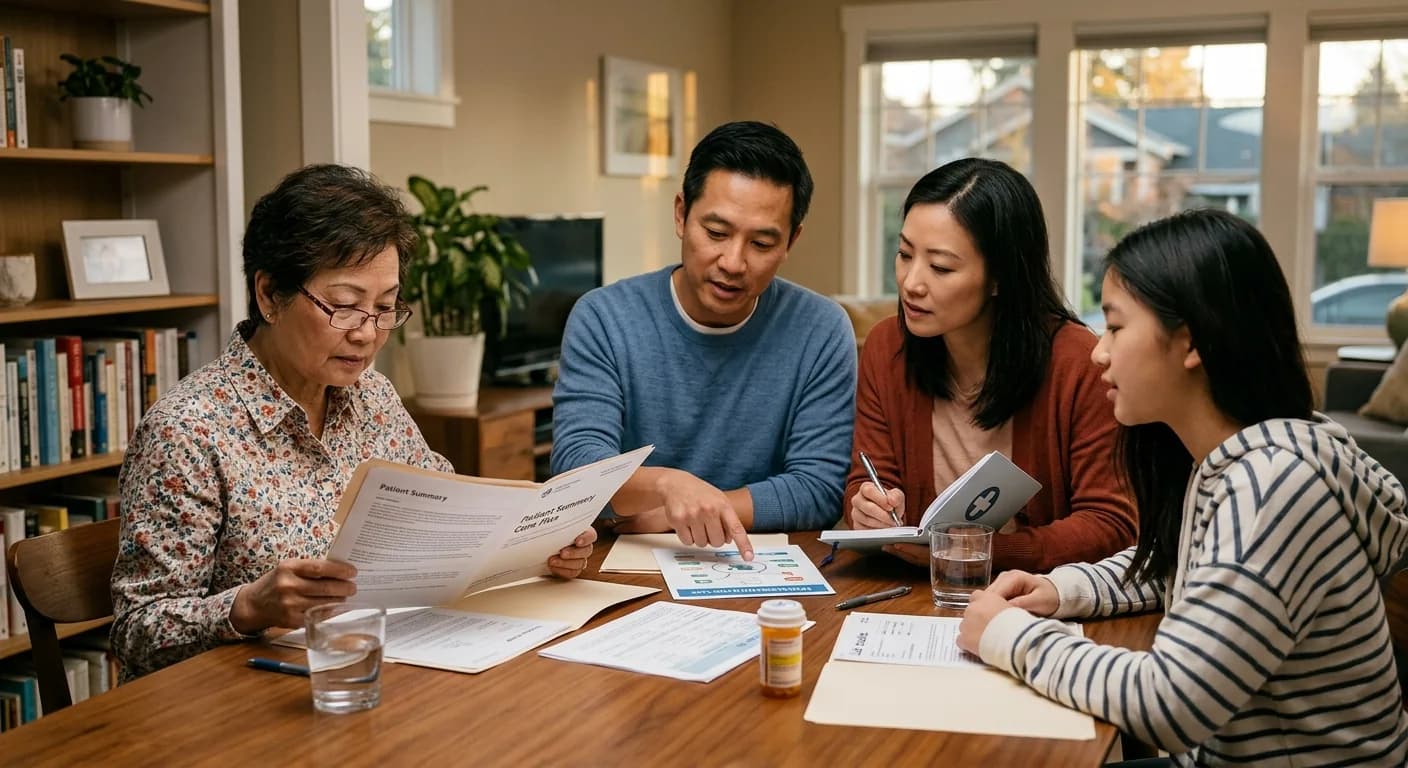
For serious diagnoses, surgery, long-term medication, elder care, or mental health treatment, many families make decisions collectively. This can be supportive, but it can also create pressure. One sibling may focus on cost, another on the doctor's authority, and an older parent may say "do whatever you think is best" even when they have personal fears. A short family meeting before the medical visit can prevent confusion.
Start by naming the decision. Then separate facts, values, and logistics. Facts include diagnosis, treatment options, side effects, insurance coverage, and timing. Values include the patient's comfort, independence, religious beliefs, privacy, and tolerance for risk. Logistics include transportation, caregiving, translation, medication pickup, and follow-up appointments. When these categories are mixed together, families may argue without solving the real issue.
Bring three written questions to the clinician: "What are the benefits and risks?" "What happens if we wait?" and "What should make us call you or seek urgent care?" These questions work across cultures because they respect medical authority while still creating room for informed consent. They also help families who are uncomfortable challenging a doctor directly.
One final habit makes the system easier to manage: keep a shared health folder for each family member. Include insurance cards, medication lists, allergies, preferred pharmacy, specialist names, interpreter needs, and questions for the next visit. This simple record helps families respond faster when a parent becomes ill, changes insurance, or receives a confusing bill.
References
- Kaiser Family Foundation. “Health Coverage and Care for Asian Americans.” 2021. KFF
- U.S. Census Bureau. “Limited English Proficiency Data.” 2020. Census
- American Diabetes Association. “Diabetes Complications.” ADA. ADA
- National Alliance on Mental Illness. “Mental Health in Asian American Communities.” NAMI. NAMI
- Centers for Disease Control and Prevention. “Preventive Care Benefits for Adults.” CDC. CDC
- U.S. Department of Health and Human Services. “Language Access in Healthcare.” HHS. HHS
- National Institutes of Health. “Herbal Supplements and Drug Interactions.” NIH. NIH